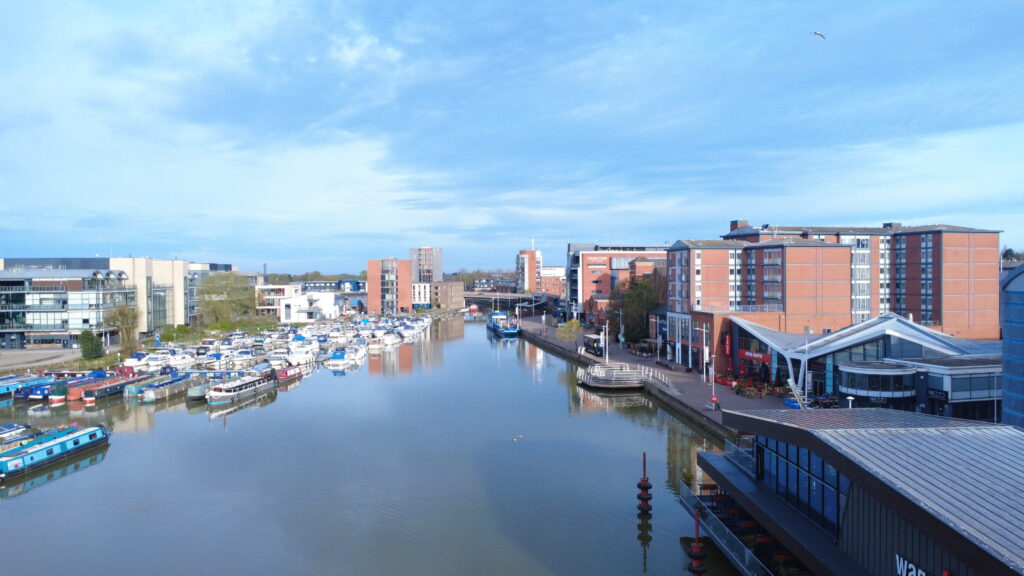
Brayford Waterfront. It is one of the most distinctive and historically significant parts of Lincoln, combining a working marina with a modern urban setting. Today, it is surrounded by contemporary buildings, including the University of Lincoln, hotels, restaurants, and residential developments, giving it a lively, cosmopolitan feel while still retaining its heritage as a historic inland port.
The Brayford itself is a natural widening of the River Witham, and it forms a central basin where waterways meet. The pool is also connected to the Foss Dyke, which links it to the River Trent. This junction has made it a key inland navigation hub for centuries. The water is relatively calm and sheltered, making it ideal for mooring boats rather than through navigation at speed.
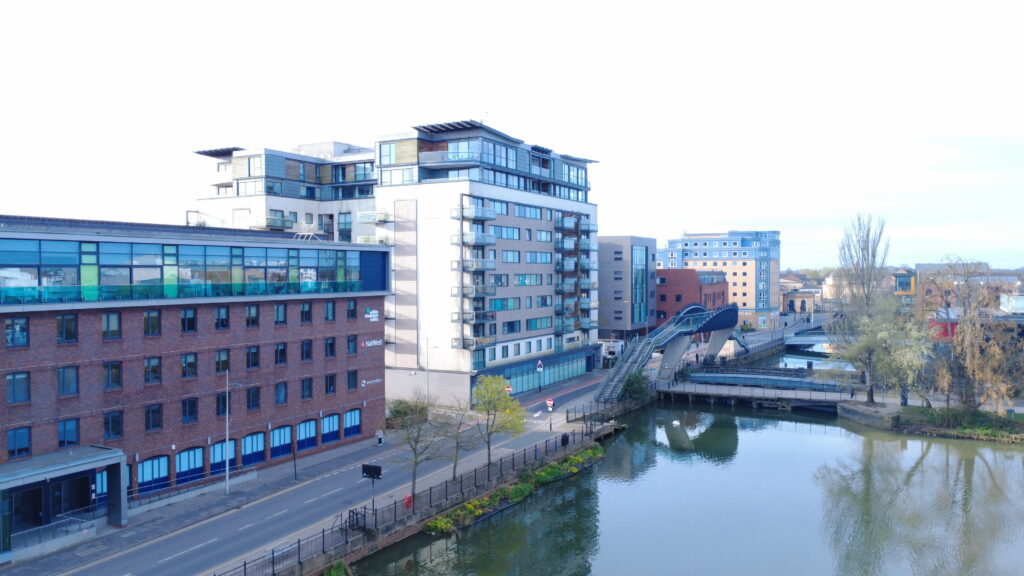
In terms of physical dimensions, Brayford Pool is not especially large compared to open lakes, but it is substantial for an inland marina. While exact measurements vary depending on historical reclamation, it is generally estimated to be around 300–400 metres in length and roughly 150–200 metres wide at its broadest points. The depth is relatively shallow, typically in the range of 1.5 to 2.5 metres, which is suitable for canal boats and small to medium-sized cruisers but restricts larger deep-draft vessels. As a result, the maximum practical boat size is usually limited to inland waterway craft—generally narrowboats (around 20–22 metres long) and moderate-sized cruisers rather than large seagoing ships.
The Brayford is considered the oldest inland harbour in the United Kingdom, with origins stretching back over 2,000 years. Archaeological evidence shows settlement around the pool as early as the 1st century BC, and it played a major role during the Roman period when Lincoln (then Lindum) developed into an important inland port. Over time, its size has reduced due to land reclamation and urban development, but it has remained a focal point of the city throughout
0 Comments