Lincoln Waterside: History by the River
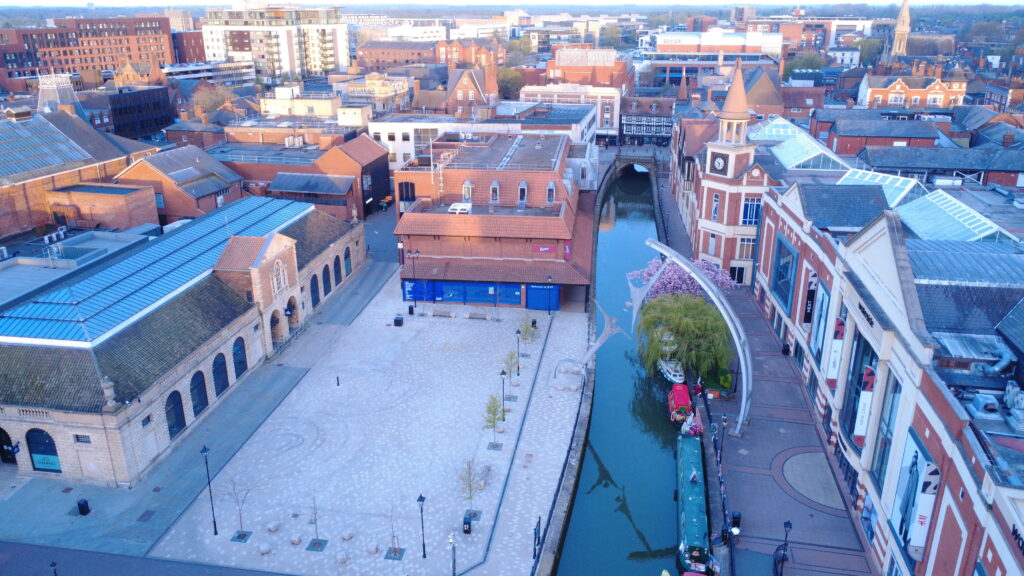
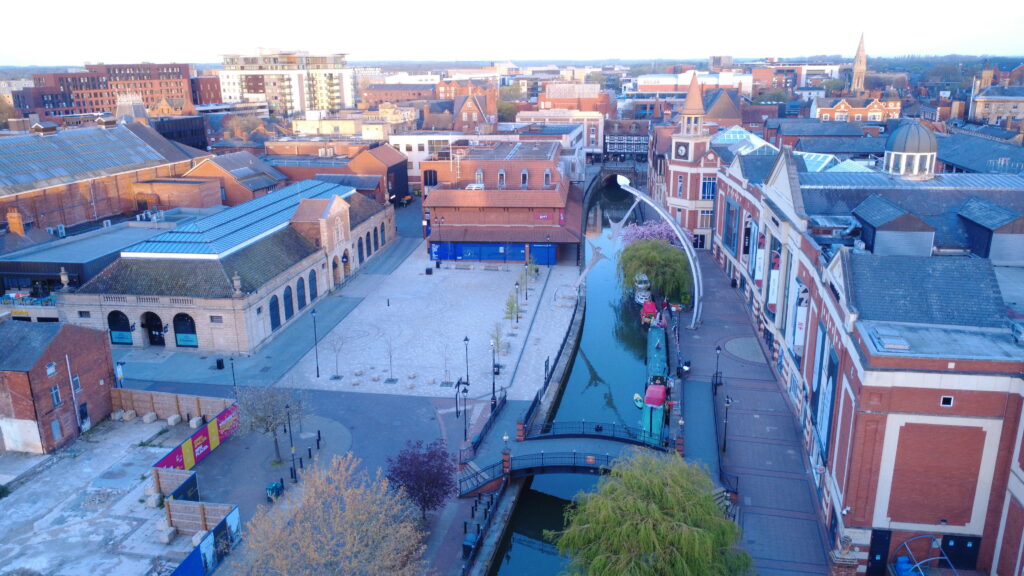
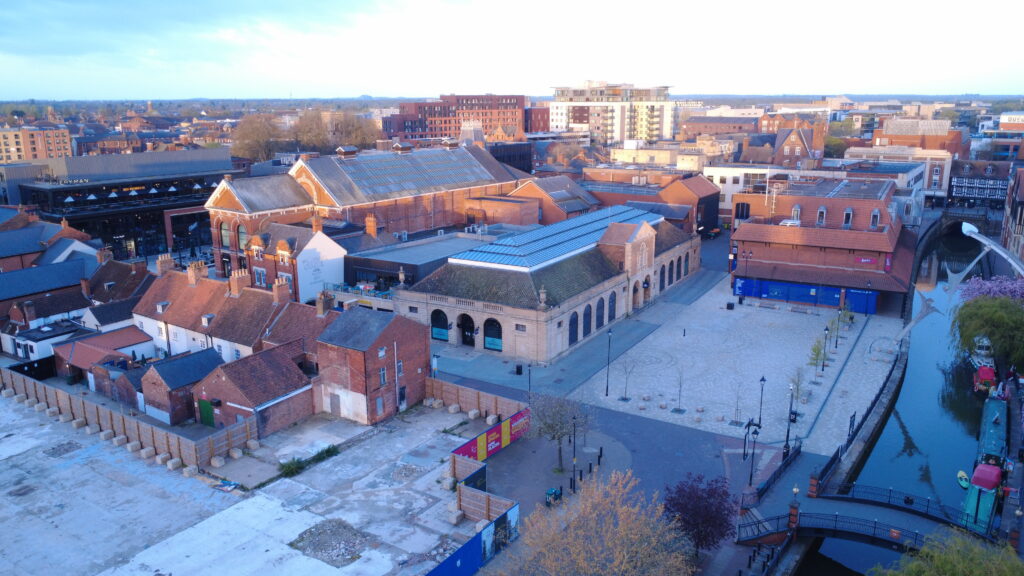
The view across Lincoln’s Waterside tells a story of a city that has always grown around water, trade, and movement. The River Witham, Brayford Pool, and the old route toward High Street helped shape Lincoln as a port, market town, and later a modern shopping and leisure centre. The Waterside area today is a blend of historic river geography and late-20th-century redevelopment.
The key buildings
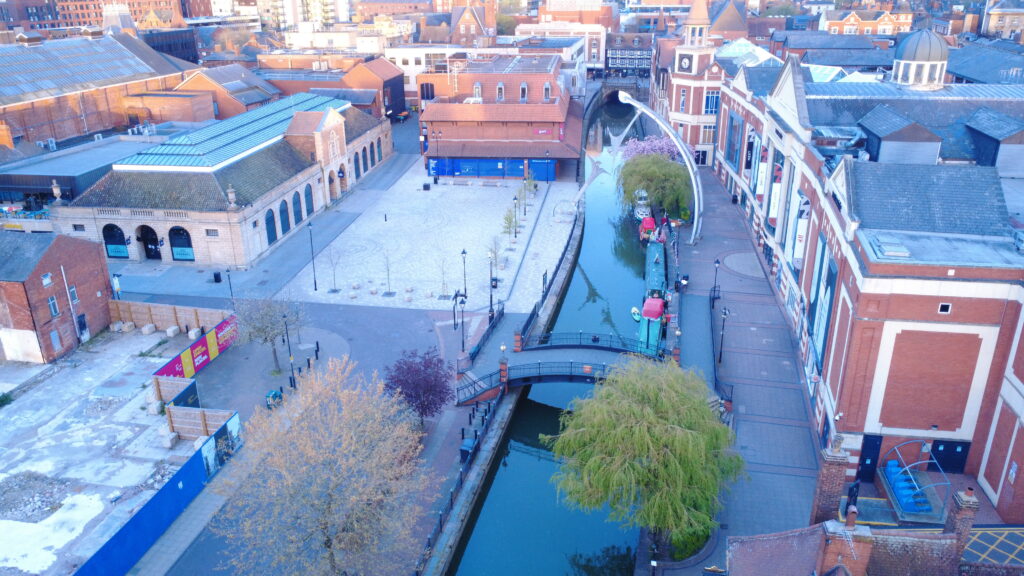
The most important historic feature in this view is High Bridge, also known as the Glory Hole. It crosses the River Witham and is widely described as the oldest bridge in Britain with buildings still standing on it, with origins around 1160 and surviving timber-framed structures dating from about 1550. The bridge’s narrow arch is still a landmark for boat traffic and a symbol of Lincoln’s medieval river trade.
The cluster of buildings around the waterway includes modern retail units, offices, and leisure space built as part of Lincoln’s city-centre renewal. On the opposite side, the Waterside frontage connects to the pedestrian shopping area and the historic High Street corridor. This part of Lincoln has been reshaped from older commercial and waterside uses into a retail destination.
The shopping area
Lincoln’s Waterside area is one of the city’s most interesting places because it brings together centuries of history in one view. The River Witham once supported Lincoln’s growth as a port and trading centre, and the surrounding streets still follow that historic pattern of movement, commerce, and connection. Today, the same waterside setting has been transformed into a busy shopping and leisure district.
At the heart of the scene stands High Bridge, better known to boaters as the Glory Hole. Built around 1160, it is famous as the oldest bridge in Britain with buildings still standing on it. The timber-framed structures on and around the bridge date back to around 1550, making it one of Lincoln’s most distinctive medieval survivals. Its narrow arch still shapes river traffic and links the modern city to its trading past.
The nearby Waterside Shopping Centre represents a much newer chapter in Lincoln’s story. Positioned between the Stonebow and High Bridge, it forms part of the city’s main retail route and remains an important shopping destination. The centre has been developed and updated over time as Lincoln adapted to changing retail patterns, blending modern commerce with a historic urban landscape.
A striking feature of the waterside view is the modern arch-like public-art piece beside the canal. While it is not a historic monument, it adds a contemporary landmark to an area already rich in heritage. That contrast is part of the appeal of Lincoln Waterside: old and new sit side by side, each enhancing the other.
Lincoln’s Waterside is more than a shopping location. It is a reminder that the city has always been shaped by water, trade, and adaptation. From Roman and medieval river use to modern regeneration, this stretch of Lincoln shows how history continues to live inside the city’s present-day streets.
0 Comments